Artist House
Barbizon
Maison de Rousseau
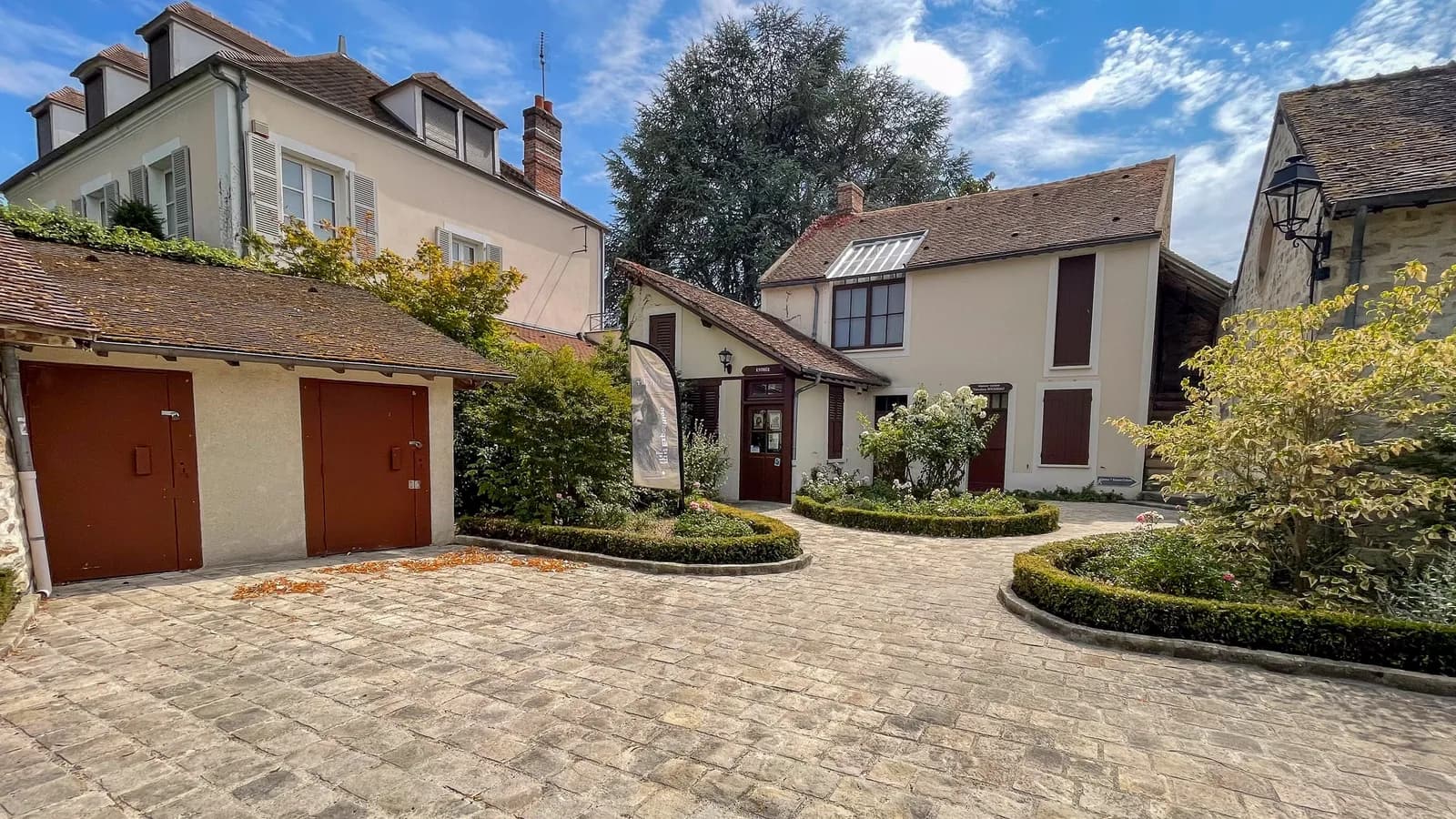
Former home of Théodore Rousseau, leader of the Barbizon School.
Description
The maison-atelier of Theodore Rousseau at 55 Grande Rue is where the founding figure of the Barbizon School lived and painted for the last two decades of his life. Now incorporated into the Musee des Peintres de Barbizon, it preserves his studio and living quarters as they were in the second half of the nineteenth century. Rousseau is considered the leader of the Barbizon School -- the loose association of painters who, from the 1830s onward, came to work en plein air in the forests and fields around Barbizon. His approach -- observing the landscape directly, treating light and weather as subjects in themselves -- prefigured Impressionism by a generation. The forest of Fontainebleau, and particularly the oaks of the Bas-Breau, were his lifelong subjects. The Musee des Peintres de Barbizon is open daily. Hours and entry fees apply. The museum encompasses both the Rousseau atelier and the Auberge Ganne at the west end of the Grande Rue.
Historical context
Theodore Rousseau came to Barbizon for the first time in 1833, drawn by the same thing that drew all the painters: the quality of light in the forest, the unpredictability of the sky over the plain, the gnarled oaks of the Bas-Breau that seemed to have been growing since before Paris existed. He returned every year until, in 1847, he settled permanently in the village and made it his home. His was not an easy life here. For twenty years the Paris Salon systematically rejected his paintings -- so consistently that he became known as 'le grand refuse'. The forest work he considered his most honest was precisely what the academic establishment refused to recognise. He lived in relative poverty alongside Millet, the two of them sustaining each other through debts and rejections and the long winters. When Rousseau's wife lost her mind and filled the house with her cries, Millet sat with him. When Millet needed money, Rousseau lent what he had. Recognition came late and hard. By the 1860s Rousseau was decorated, received by Napoleon III, elected to the jury of the Salon he had once been banned from. But by then he was ill -- a paralysis confined him to a wheelchair, and his wife's madness had not lifted. He died in his Barbizon studio in December 1867, aged 55, while the bruyere outside was still in flower. His last wish was to be taken one more time to see the old oaks he had drawn for thirty years: the ones whose portraits, he said, were all in his cartons. The maison-atelier at 55 Grande Rue is now part of the Musee des Peintres de Barbizon, which also occupies the Auberge Ganne at the other end of the street. Rousseau's studio and living quarters have been preserved as a period interior -- a place where the distance between the painted forest and the life that produced it collapses to almost nothing.
Historical research: grappilles.fr — Barbizon Histoire et Patrimoine
Related places
Additional locations in the Artist House group.
Artist House
Besharat Gallery
Contemporary art gallery and luxury suites in a historic Barbizon building.
View place →Artist House
Maison de Barye
Maison-atelier du sculpteur animalier Antoine-Louis Barye (1795-1875). Le seul sculpteur de l'Ecole de Barbizon, ami de Delacroix, auteur des lions du Louvre.
View place →Artist House
Maison de Charles Jacque
Maison-atelier du peintre et graveur Charles Jacque (1813-1894), dit le Raphael des moutons. Il y installa egalement un elevage de volailles et une aspergerie.
View place →Nearby
Within reach on foot—village lanes and forest edge.
Heritage Site
18 m
Chapelle de Barbizon
The village chapel, converted from a barn belonging to Théodore Rousseau's house by his architect brother.
Restaurant
33 m
O Bout
Bistro, wine bar and local produce shop at the forest end of the Grande Rue. Opened 2023.
Restaurant
56 m
Epicerie Vegetale
Restaurant vegetarien et epicerie fine vegetale au coeur du village.